Tuesday, 18 June 2013

Teach Meet Clevedon - are you a Dolphin or a member of the Ungrateful Dead?

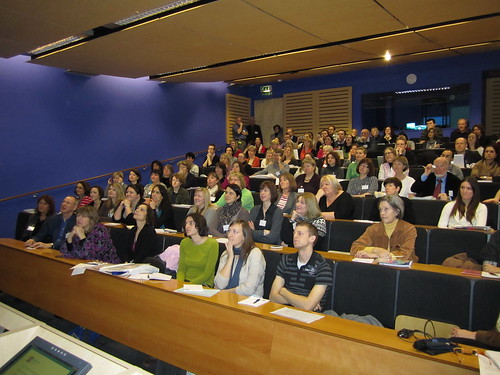
Blimey - when did you last get rock music and popcorn at an INSET event?! Well, they put on a great show at Clevedon as many have reported, but there is plenty of serious learning  going on. It is a testament to teachers in general that at this busy, run-down frazzled end of the year, so many people tip out for an event starting on a Thursday evening at 5 pm.  Why?

Here's what I have been thinking about from one of the speakers and I will try to write a bit more shortly.

Keynote man was Hywel Roberts - lovely blunt Northerner, full of warmth, great stories and fun. Read his book on "accidental" learning - get the pupils in and make them fall into your carefully prepared trap full of learning before they realise. This is hard in MFL, Hywel - pupils can come with the sour "oh God it's French" mentality which makes them very wary before they get to the door. This may resonate with other MFL teachers.

Hywel mentioned these things

  • you must address your coverage of the curriculum by all means but with creativity
  • think about the integrity of the learning on offer
  • How can we make learners more independent
  • Hook the kids!
Teachers need - Enthusiasm/Courage/Hope /Energy 

He talked about "botheredness"!! Can we be bothered? Have we enough ongoing unconditional positive regard for our pupils to keep being bothered? How do we show our "professional capacity to forgive" - very hard with those challenging or under-achieving children in our care, but Hywel asks teachers to re-consider these concepts of the emotional stance that teachers can take and illustrated with some very moving stories of children he has met whose lives have been transformed by teachers actually caring and listening. 

His analysis of teacher types raised a laugh
Where are you on the chart - enthusiasm scale on left hand side!!!


puppy


Young and keen but less experience

dolphin


Top of your game
the Ungrateful Dead
!
Sleeping bear
Lots of experience but…


What I've been trying to consider too - his KEY QUESTION - are your lessons worth behaving for?
Some days, that's a hard one but we owe it to the pupils to produce lessons worth behaving for and then we may get more of the learning we want to see.




Wednesday, 30 January 2013

10 ideas for dealing with differentiation!

We agonise over differentiation in MFL classrooms. It's hard -  how can we differentiate when we're speaking another impenetrable language anyway and it's raining and 9d5 aren't giving much in the way of learning signals.... I know all the arguments but we need to address the issue everyday in our ordinary classrooms. Many of us are still teaching very mixed classes even if they have been put into sets.

I have tried to think about quick tips - fast ideas which won't lead to instant insanity/resentment/overload. Nothing fancy - just things we do and take for granted or have forgotten about.

1.Simplify something existing - don't re-invent the wheel. Take your Tippex to another worksheet and alter or chop a sheet in half.

2. Copy on to pale coloured paper for dyslexic children and make it larger. Allow pupils to cut out and stick instead of writing or join with lines instead of writing out.

3. When doing a complex listening, pop the answers on a piece of paper in the wrong order for a weaker pupil who you know won't manage the exercise. They can listen and re-order - fast solution to a tricky problem. Or allow pupils to listen for half the items if they struggle. Most able can listen for opinions.

4. Set a Find the cognates exercise for SN pupils while others do harder questions and answers. Other possibilities are - Find 10 words you know; 10 words you have seen but can't remember etc. 10 verbs, 5 numbers and 5 times...

5. Give pupils a photocopy of harder text and ask them to colour in various items - blue for nouns, red for verbs, add yellow for pronouns to stretch most able, orange for adverbs or colour in different categories of words. Think of these ideas on your feet in class sometimes - go with your inspiration!
6. Type a list of basic vocabulary for slower writers and leave them to write in the English only. It doesn't take a moment and gives a sense of achievement. Have extra words ready to challenge more able learners. Have a super challenge ready for the very best!

7. Allow a dyslexic child to do a vocabulary test orally for you or record a written homework for you.

8. Make answer sheets for self-marking when you have produced two different worksheets - pass them around so that everyone can mark fast.
9. Give out simple sentence starters and writing models for weaker pupils - more pupils need these than we realise. Grow a departmental bank of these and ensure everyone is contributing!
10. Buy in a programme like Taskmagic which will create a variety of worksheets for you - job done! Dominoes and gaps and matching lists - terrific choice for all pupils.

We are starting a CPD group on differentiation so I may come back to this theme. What have you found that works easily?

Saturday, 13 October 2012

Having a go at My Brainshark

I've been meaning to try this for ages and I am doing a presentation shortly so I thought I would trial my Brainshark with some of my own photos. We had a fabulous holiday and i would thoroughly recommend this company if you get to Port Douglas for your reef trip!

However my main point is that you can use this site for adding commentary to any documents, powerpoint or photoshow and I think it has great potential for inspiring better presentations by our pupils, as well as enlivening materials we put together. I might be tempted by the pro version in order to refine security, notifications and so on.

Have a watch!


Forgive the amateur commentary but I set myself the task of recording really fast with no script, just to see how manageable it was. I am impressed at how feasible it is to make a good -looking presentation and I will be able to set my pupils a more interesting way of preparing their work. 

Wednesday, 11 July 2012

Presenting for colleagues

I was pleased to have the chance to put together some ideas for colleagues at school recently - I must admit - with a little trepidation - it's not easy presenting to teachers, I think. Well, I did the presentation and enjoyed presenting and sharing. So I tried to present my journey, my inspiration for the engagement with "Web 2 tools" - soooo 2005! according to my techie son - I'll have to change the terminology.
I have learned a lot from the MFL Twitterati, who share so well and also from the MFL ICT conferences which have been excellent.
It was pleasing to get positive reactions from my colleagues in other departments so I put my presentation on slideshare and found that many people enjoyed discovering slideshare also! I was grateful for this positive feedback and encouragement - I am nowhere compared to the speakers I watch in my turn, but there are still many professionals working away on their own, needing support and feeding with new ideas, grateful for a bit of something new or a reminder of something they have forgotten. Here's my presentation - simple but a reasonable starting point, which won't overload.

Wednesday, 13 June 2012

Livebinder for teachers

I just found this link on Twitter the other day and was delighted with the fabulous comprehensive content. Maybe you are very familiar with this guy, but I thought the link was worth investigating in detail. Great stuff Tim and thank you for such a brilliant overview of the tools available for teachers in such a good filing system! Tim lists hundreds of tools in types within his filing system. I particularly want to try more of the curation tools - livebinder, symbaloo, pinterest, linoit,- museumbox looked good for History teachers.

http://www.livebinders.com/play/play_or_edit/365641


Sunday, 27 May 2012

Mind your shoulders!

I have been a bit quiet for some time - I am a Head of Department and I find it very hard to make as much time as I would like for writing my own posts, doing the business of reflection, sharing new materials or just writing about the stuff I do in class with ordinary kids, day to day. Like most teachers, I live with guilt about it too!
However any computer activity has had to be curtailed as I found that I was getting RSI in my right shoulder and mouse hand.
Very common apparently - physios deal with lots of us and the modern world is causing a lot of shoulder injury.

To look after yourself - always stretch your shoulders regularly. Keep your shoulders down and back, keep your neck moving and try to keep the mouse nearer to your body for example.
If you use a laptop, get a stand, buy a separate keyboard and mouse and use them at the correct height for you - you need to be looking straight at the screen at eye level.

You need to get the levels of inflammation down and then do exercises to build up upper body strength too, which can be problematic for women of a certain age also! See your doctor and don't ignore your aching shoulder! All for now, before I set it off again.

Saturday, 8 October 2011

A level Environment topic - a song to use

What's the weather outlook for humankind? Ask GCM - Grand Corps Malade,  His "Bulletin Météo" was enjoyed by my Year 13s recently as a change from the more solid approaches of text book or articles from the Web. I love his style and way with words, so it's win/win.


For what it's worth, here is how I used the song.
  • Lead in to the idea of using a weather forecast as a metaphor for the future prospects of something - French equivalent of "outlook bleak", or " clear periods with storms on the horizon"
  • Play the song Bulletin Meteo to class and ask them simply to try to note down any weather related words they hear. They can find 10 or so by the second time through, I found. 
  • Next, they should try to note down the rhyming words at the ends of sentences. Challenging but fun. Very interesting to see the kids comparing their findings and misheard attempts - they learned a lot from this about the sound/spelling link like claire et nette NOT clarinette!
  • Next, let them see the text - I found it easily on the web. They highlight the weather words, look for cognates and we worked on the text to see if we felt GCM was positive or negative about the future for mankind, from the language he used. 
  • Next for fun we read through it all with GCM trying to match his speed! What a good exercise for trying to improve your mouth muscles in French! 
  • We worked through the meaning of the text in groups of lines with a lot of help from me. I left it there with a final hearing of the song but wonder if I could be brave enough to get a talented class like this to write a forecast next.
It's not an easy text and as usual I wrestle also with exact meaning in places as a non native, but I think it's worth helping pupils to see that real songs will not always be fully understandable, certainly on the first meeting with the material, but that with effort you can get a lot from it. 
By the way GCM is positive about a future for humankind IF we change our ways - Hmmmm. On va voir.

Monday, 13 June 2011

Why I like Twitter

I sometimes feel the need to apologise for looking as if I am a complete nerd - " You like Twitter??" - include the tone of incredulity for full effect, along with the raised eyebrows. Well, yes, I have found it to be the single most important thing I have learned to use over the last couple of years.
1. It allows you to follow other like-minded people or more talented people than yourself
2. it allows you to ask loads of questions of an intelligent audience
3. you keep up to date in a wide range of fields more easily
4. you get amazing links for teaching and educational developments.
5. it breaks down the isolation of the classroom
6. you make new friends - I have met a lot of Twitterati in "real" life too and you actually do know them a bit better!
7. If you ask the right group of people, you get superb advice/ideas back again.
8. Instant support - sorry you're ill, I've had a hard day too, tricky kids, demands getting too much etc - we all need a listening ear for our mental health and Twitter actually fulfils that role.
9. You can create your own source of Prof development or PLN - personal learning network. I certainly learn from the people I know and hope that I manage to contribute back sometimes.
I loved Phil Beadle's remark that following the conversation of bright Twitterers was like a shot of mental expresso - he's so right.
Join up and go to the Twitter account of one of the MFL Twitterati, then start to follow a good number of twitterers - choose people who give a proper account of themselves - anonymity is not recommended etiquette for educators. Start to follow conversation and pluck up the courage to join in.
Bonne chance - @froggyval

Monday, 2 May 2011

The Southampton ICT conference - worth a weekend?

February 2011 Southampton - Linksintolanguages MFL ICT conference - Well, absolutely. For many reasons.


1. Although it was a weekend conference and took away from my home time, as the indefatigable Isabelle Jones says, it was "professional ME time".
2. I met loads of other MFL Twitterers who are a terrific bunch.There is a new phenomenon around when meeting people. First you introduce yourself and then you give your Twitter name and suddenly an extra lightbulb flashes on - "Ohhhh! You're so and so!!!" - it really does add an extra dimension to friendships.
3. Fabulous plenaries, excellent seminars, very good speakers, generous exhibitors and great surroundings. Oh and good food.
4. Plenty of DIFFERENTIATED CPD for all. All seminars were graded for IT skills required - very good to see and I wish more CPD providers would do this.
5. It was serious, thought-provoking, challenging and also fun.
6. Highly motivated teachers are great to learn from and encourage the rest of us not to be shy.

All seminars and Plenary keynote sessions are covered here on Joe Dale's site. Have a look and follow up some leads - they are tremendous and I will certainly try to go again next year and a big thank you to all who organised such a good event.

Monday, 24 January 2011

MYLO for Merlin John

Here is the link to my article for Merlin John mid January. I was delighted to be able to talk about MYLO for his super website

- we are using MYLO with all of our KS3 classes as best we can and giving it a real go. I like it a lot - it's modern, trendy, the pupils can get going on it fairly intuitively apart from a couple of spots where teacher knowledge really helps
1. TELL them to join the class group you have set up for them - there is no prompt
2. Remind them to scroll down to see stuff! It is amazing how often they don't look!

They LOVE the competition and we are trying to catch up with Norton Hill School at the moment - this local Language College is storming ahead. The Ballard School too is one where I know the teacher and it makes a difference if I say we have to beat so and so! Our pupils are learning well with it - they like the style, the avatars and they visit lots of the challenges at one sitting. The next step is to get them producing the final projects - we have set the work to do at home for a number of classes,who seem to be delighted to have an IT homework to do for languages.

If you haven't yet experimented with MYLO I would highly recommend visiting the site and having a go. It's free, well designed and ready to run for classes in KS3 and some KS4. Here's the official plug!

MYLO
Free online language learning website (internet connection required) aimed at pupils studying modern foreign languages at key stages three and four. It contains interactive challenges and support material in French, Spanish, German and Mandarin.
MYLO, has been developed by Lightbox Education, in partnership with the Department for Education, Cambridge University, CILT, ALL and the University of Salford.
MYLO website http://mylo.dcsf.gov.uk
Email contact info@hellomylo.com
Technical support line: 08453 077 834

Monday, 10 January 2011

London Language Show Oct 2010

I had a great time at London Language Show - first time I've made it and it was great to meet many of the teachers I have got to know virtually. Marie France and I ran the gauntlet of the exhibitors' stands looking for good ideas,inspiration, freebies - of which there were fewer - and excellent seminars.


Just a shame about the sound deficiencies - how can they think that running seminars in open-topped tents inside a main exhibition hall is a good idea? Speakers really struggled but all had come prepared. Joe Dale, Russell Stannard and Rachel Hawkes had all learned the hard way last year and had talks already on their blogs or websites - Russell had even recorded a version of his in advance!!

Here are the links to the various sites for these seminars. Joe as ever is full of excellent ideas for using Web 2 technologies in class and he piles on the information so that no-one feels short-changed. If you don't know Joe's website - visit it quick joedale.typepad Joe has a handle on all things ICT for MFL

Rachel Hawkes has so much energy that her seminars are packed full of expectant teachers who know that she'll give fantastic value for money - she didn't disappoint. I really enjoyed both of her seminars and have shared both in school as best I could. Links here for her tremendous material - all at her new website www.rachelhawkes.com

Here's the link for another presentation that Rachel did on ideas to take to the classroom tomorrow - it's full of great ideas that this generous lady is happy to share. I have been promoting it with my department since the London Show.
I'll do a separate post on Russell later - so much to relate!

Sunday, 24 October 2010

HoD Conference Somerset 2010

It was a treat to hear two excellent speakers in Steven Fawkes and Greg Horton at our annual get-together in Bridgewater.

Creativity is a great theme for Steven and he is an amusing and warm-hearted speaker. I felt he said we can do more with less - use little ideas to inspire kids to talk - use lots of mimicry, read numbers like football results, use gesture to reinforce meaning, get kids to talk through pictures and make up stories with simple 10 second sketches as prompts. Much fun was had with colleagues trying out Steven's ideas together. I was only sorry that the wifi was not good at this new centre and Steven was not able to use the One Semester of Spanish Love song which he wanted to show. I will post more ideas when my copy of ppts comes through!

I had heard Greg Horton's name mentioned frequently of late and was therefore looking forward to seeing this innovative winner of the European Language Award.

Group Talk is the title given to the package of ideas which Greg and the team at Wildern School Southampton have used to promote spontaneous talking in their classes.He was keen for us to realise that it doesn't cost more or give you more to do!!What a relief!

Greg outlined the reasons he had started to try to get more speaking to happen in his classes
- Gender gap
- Low numbers opting
- need to get more speaking done by kids
- Transactional tasks are be too boring and rigid.

Greg has been promoting chatting and comparing i.e. authentic discussion about things that interest the pupils. He was keen for us to consider teaching much more language of "conjecture"

Here is what Greg says it involves
• Only target language
• Interaction between a small group of pupils
• Opinion, conjecture and debate
• Language is colloquial du bist die Extrawurst – you’re the odd one out!!
• Fett – it’s cool,sick, wicked!
• Hear, process, respond
• Encourage kids to be themselves

Teach them the language they need for the above
"perhaps, I think, about, that’s rubbish, you’re joking
Think, suppose, estimate, consider, wonder
in short, give them the tools to be able to say what they want to about topics that interest them. It makes perfect sense and Somerset HoDs were inspired.

The Stages of GROUP TALK

1. Exchanging and responding to simple opinions
2. Taking part in a short discussion
3. Exchanging reasons and preferences – talking across time frames
4. Developing a line of thought, balancing an argument, sharing points of view.

Greg's team have had tremendous success with the Project - massive increase in oral exam marks - and we have started to work out how to implement the Group Talk ideas at our school. I would recommend the teachers tv clip about Greg's work at Wildern School as a really good starting point.

Wednesday, 29 September 2010

CPD in Critical Times

I have been very busy thinking hard about how to put together my first presentation for our Head of MFL conference here in rural SW England. It's sort of - flattered to be asked, scared to be doing it!! I've warmed to my theme and here is my presentation - I really have learned so much over the last two years about ways of keeping up with latest technology and using Web2 tools for teaching. I am also a very convinced Twitter user and love Google reader.
I have given useful links on last page of presentation and hope that any one from our conference who finds their way here, will find the ppt useful, practical and not too geeky. Many thanks to Twitter friends and FM friends for assistance and my 2 delightful sons, who are a constant source of patient advice for me and a fount of knowledge.

Thursday, 23 September 2010

Here we go again!

Maybe I will manage better this year - as a Head of Department, I constantly go over what else we can do, should do, could manage to do, to improve learning and teaching - that's my job along with all the other admin bits and pieces which often hold me back from focusing properly on that teaching and learning. Heads of Dept will know exactly what I mean.
Followed a great thread on TES forum about time management and people's ideas about how to manage better. I even took the time to make a list. I am particularly liking the use of an old kitchen timer for 25 minute bursts, with a 5 min gap to do whatever you like in, before resetting the timer if you need to. I can cope with 25 mins but not the thought of 11/2 hours of marking at one go. The system fools me into sensible chunking. So far, so good.

I might manage better this year too as I have some very major things behind me - the OF**** word, - they hit in May - we did well. I did my Leading from the Middle course last year too. It was pretty good, I am quite reflective already, so it maybe wasn't as revealing to me as to some others, but time spent with other Middle Leaders was very enjoyable - glad to see this kind of support is now available (but it may disappear??) Read Alex Blagona's interesting post on his experience of Leadership attempts!

One of our lovely successes last year too was a big joint project with our Partner primary schools. We all did story-telling - can you guess our story?!- and drama and then our year 7s went to visit a Primary school with an MFL teacher - result is that we all performed what work we were each doing, all our team got a chance to go to a Primary school and our Year 7s loved going back to yr 6. What is more, all the teachers are still friends and we understand what we are all doing or trying to do. I call that a result! In the face of so much change at Secondary level, the project with our Primaries was great fun, even if someone reversed the school minibus into a police van on the day of a visit... ooops! No injuries - phew!

So I look forward to a productive but slightly less hectic year and trying to keep my sanity will be a priority!

Thursday, 8 July 2010

Teaching English Grammar to English kids!

The title says it all - we need to teach grammar explicitly, it doesn't just happen; Englishpupils know less grammar than many other European pupils and at Secondary level, we pay a price for having a mother tongue which doesn't have Romance language verb endings. We do have complexities of our own - pronunciation and English phrasal verbs for example - but not verb endings and they still have no real grasp of what a verb is quite often. What can we do?
Well, Charlie Berney - teacher of MFL in Wales, member of ALL West of England committee and frequent, talented speaker in our area - led a good session on her recent attempts to be cross-curricular with a difference. Her main difference is that she goes to the SUBJECT and delivers the content in THEIR lesson and Charlie generously provided us with her CD of materials for an English grammar sequence of lessons, dance, cooking and  Geography.
Most interesting was the fact the her English colleague stayed in Charlie's "What is grammar?" lesson in the English department and was devastated to see the reality that we face often - kids do not appear to know what a verb, noun, adjective, pronoun etc actually are, despite the fact that they have been met in Primary school. Surely this trend is only going to get worse as the Literacy hour disappears again??. Interestingly, when Charlie asked the class to tell her what some grammar terms were going to be in English, they came up with spelling and punctuation rules - "i before e, except after c etc."
Charlie kindly allowed us to use all her grammar booklet and powerpoint from our March conference and I am finding it immensely useful now and plan to use it extensively at the beginning of the academic year. I want to see children who are not afraid of the term "verb", never mind - er verbs and "terminaisons" !

Saturday, 22 May 2010

Year 9 comes up trumps!


After the lessons we did recently on Apollinaire's shape poems - "calligrammes "- I set my lovely Year 9 class the homework of coming up with their own poems - a re-working of Apollinaire's poem Automne (which some of them managed very well) or making a calligram of their choice.

Here are a few of the results on my classroom wall. We used two lessons, we read the Automne poem and analysed it, then discussed how they could adapt it easily to another theme and then we went on to look at more Apollinaire calligammes, particularly the Eiffel Tower shaped poem, which is a rallying cry against the
Nazi invasion of Paris. 
One pupil changed it into a celebration of Paris as the capital of l'amour!

Their homework was to come up with a new poem and/or a calligramme. 
Results were mixed the following week, so I set the classroom out in groups and they took their work and compared it with each others' offerings and decided on improvements - AfL boxed ticked!! 

Katie G did a wonderful figure of Michael Jackson and turned it into a tribute to the singer.

You can see the ideas she included here. Not all of her classmates agreed with her choice but her tribute is obviously heart-felt.

Many other pupils loved the sun shape as it lends itself to short phrases and circular repeating images. Flowers were popular also, with a few very imaginative landscapes. Quality of French improved from one week to the next and pupils happily put their work up in my room.  This class has only one lesson of French per week , as the other one is German - the only way we can get them enough exposure to a couple of languages in no extra time. So WELL DONE 9a1!!


Posted by Picasa

Sunday, 16 May 2010

MFL Show and Tell at Nottingham High School, Sat 10 July

Last year I went to my first event of this kind and had a really profitable time.  Come to Nottingham if you can - Jose is a great host, the company is fab and the learning you can do in one day is second to none. It is tempting to feel that you may be overwhelmed  and feel you will be unable to say anything - all I can do is encourage you, by saying I had a very warm welcome last year, there are people of every level of experience there and we all learn from each other. Many teachers are real techie experts, presentation experts, Primary experts - all with an open, sharing, friendly presence - here is the link to Jose's site MFL Show and Tell at Nottingham High School   Others are novices and need to go over ground which is familiar to many - don't worry, you are so rewarded for taking the plunge and coming along, regardless of expertise or lack of it. Extremely relevant, up to date, on the ball, challenging, well-tailored and grounded CPD - what more could you want?! See you there.

Monday, 3 May 2010

Controlled Assessment for GCSE

A recent Linksintolanguages meeting brought over 50 concerned teachers out to a meeting at Norton Hill school near Bath to discuss all aspects of the new GCSE controlled assessments. Gosh, we are a worried bunch and real attempts at assessments are not lessening our worries.

Peter Spain MFL Advisor for BANES  spoke in the Plenary and then we broke into Exam board groups.
Discussions covered the how, when, how long and wherefores of the process we deal with now.  We are all struggling with the design of Assessment topics, although I feel we are doing it well. The main angst is caused by the slightly bizarre rulings on management of preparation time - those of you in the middle of Year 10 assessments will know exactly what I mean. Teachers don't like to be rendered incompetent by so much change!

Peter and the team at Norton Hill very kindly put his and other presentations on the BANES wiki - here is the link http://baneslanguages.wikispaces.com/Current+news

The only road to comfort if you are picking up a new class in September is to make sure you understand the importance of teaching the class to build up a bank of useful material as they go along including good paragraphs which you have marked for them. They need to know that everything you cover is important for them but without you betraying what the eventual assessment task will be - "prepare yourself for something you don't know about yet "   - it feels very odd but it's the only way to do it.
Our stronger pupils will cope as they always do but I feel that the new GCSE will make life on the C/D borderline very much harder and lower ability pupils are not coping at all. Do you agree?

Wednesday, 28 April 2010

Inspiring work - calligrammes

Last month my friend Marie France Perkins sent a tweet out about the lovely work done by her pupils on the 1st World War - if you don't use Twitter then you may be missing some of the amazing sharing that takes place on a regular basis. Marie France runs her blog called Sans problèmes for promoting French and show-casing her pupils' work. In March she posted some fabulous calligrams - picture poems in the style of Apollinaire - and a terrific link for a french site showing Art from the WW1 trenches - very moving stuff and MF's pupils have produced some great work - thanks for sharing with us. It has reminded me of this lovely way of recycling vocabulary - word pictures for all sorts of lexical areas.
I like the site for English teachers too for writing shape poems - there is a lot that we can adapt very quickly for MFL. This week I have challenged my Year 9s to make their own calligrammes in the style of Apollinaire or to substitute their own ideas into his poem Automne - I'll post the results when I mark their work with any luck!

Tuesday, 23 March 2010

ALL West of England Branch conference Saturday 6 March 2010

Teachers are real gluttons for punishment, tipping out on a Saturday morning for CPD, but it was a great morning and lovely to see new faces and stalwart ALL committee members still carrying the flag for MFL.

Key Note address was given by Wendy Adeniji, consultant, teacher, "Regional Co-ordinator for dissemination of the New Modern languages Secondary Curriculum," general MFL mover and shaker.
Wendy knows the importance of being a realist and that was a most welcome introduction to the day. Any speaker tackling the renewed KS3 Framework has to be brave enough to take on the grumpy and over-worked like me and I enjoyed Wendy's Keynote speech very much.

Wendy focused on effective KS2-3 transition, aiming to provide coherence and progression, all with a dash of her key theme - "Teaching the usual in an unusual way " - the strap line from one of her websites, link here.

Main points of the new Framework were most helpfully summarised for us and we came away with simple ideas to integrate into SOWs straightaway and some publicity for ilanguages' really good SOW for the whole of Yr7 - I have sent for one of Wendy's sample CDs to try out a few lessons.

Wendy gave us a quick review of her take on covering new KS3 Framework in unusual ways.

1. Using songs for Linguistic progression - teach the grammar for finding je forms from the infinitive - Wendy used Lorie, Abba for -er or ir verb endings and Henri Dès' Polysong for teaching sound/spelling link.
2. Lovely idea for Vokis - get the year 7s to record who they are but then add the twist of saying j'ai les cheveux bruns mais je voudrais les cheveux raides et blonds. - Neat.
3. Wednesday is Wendy's midweek challenge day - She showed us some superb work on Fairtrade ideas with yr7 using Ethletic Fairtrade footballs - take a look at jeujouethique.com website and eco-sapiens.com. Wendy and her co-writers have used the ethical idea to give Year 7 work on sports a novel tweek. Her material was superb.
4. As Thinking skills are so highly promoted in the renewed framework, Wendy reminded us of "Thinking through MFL" by Sheryl Mackay & Mei Lin and demonstrated some materials which test pupils ability to identify facts from opinions for example. Unit 11 of the renewed Framework was brought to our attention again - I really appreciate the push to engage with the material!
5. Using the web to flash up front covers of teen mags in French or German etc will test ability to read and decipher meaning fast. Try "Jeune et jolie" for French or "Mädchen" for German. Realia has never been so accessible.
6. Exploiting poems for reading and creative writing.
7. Intercultural Understanding is of course now a huge part of KS2 and KS3 work but if you lack the resources or inspiration, then look no further than Wendy's ready-made materials. Stunning use of pictures of families' food for discussion, comparison and sobering reflection - how much do they get to eat in Togo etc?? I also loved the use of Amadou and Mariam's hit "Quelle heure est-il à Bamako" and video clips about Fast foods in Senegal - all for Year 7!
8. KAL - Knowledge about Language. Wendy and her co-authors have put in a lot of language awareness materials at the start of their Yr7 SOW, some of it based on Latin for example and also on the 100 most important words in English, French, whatever - I was very impressed by the snippets she showed us and felt inspired to investigate further.

Altogether a great opening to a day of learning and I have been reading Wendy's sites since, gleaning ideas and materials for next year. Her stand-alone modules on Chocolate, Fairtrade, Art for example are going to be life-savers...